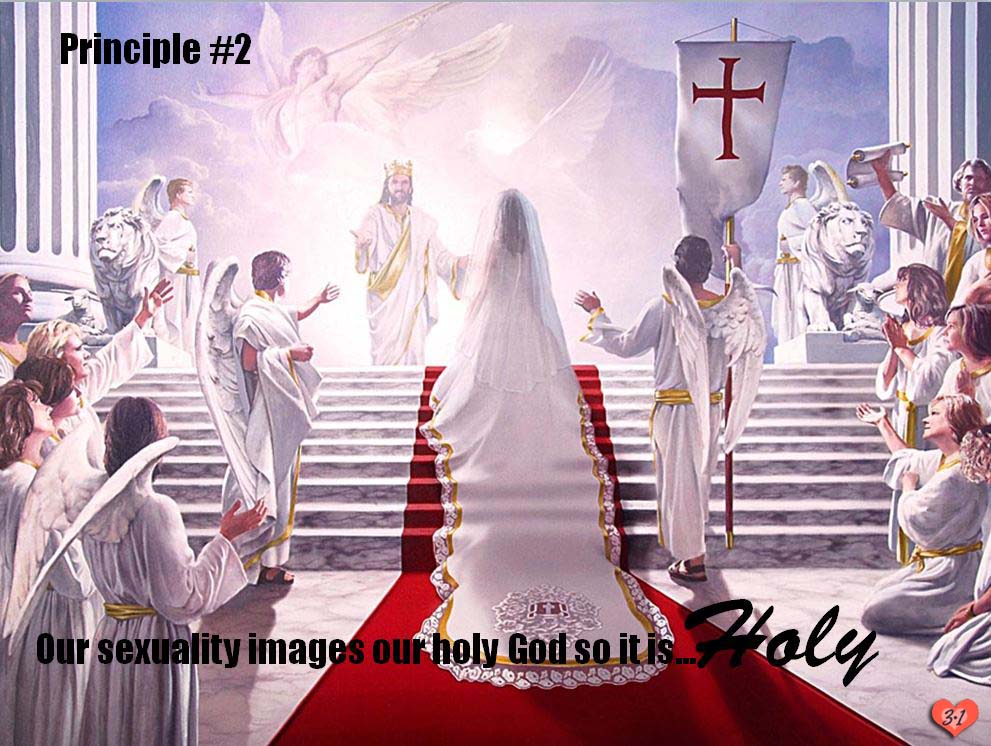
Principle #2: Holy (Teach your children godly sexuality part 8)

godly sexualityIn the previous three blog posts (1 2 3) we’ve been discussing the first principle of teaching your children godly sexuality: communicate its goodness.

And it was declared to be very good (Gen 1:27) as our sexuality images our Three-in-One God.

Now, the lie that the world tells us is that we’re just clever animals.  Therefore sex doesn’t mean anything; it’s just an ordinary act to meet a biological urge.

The truth is actually the complete opposite and the opposite of ordinary is holy.

Holy means “set apart” and totally different from the ordinary; hence we have holy-days, ie holidays, which are different from our ordinary (work) days.

The way Hebrew communicates more and most is by repeating the word. So:

  • holy holy = more holy
  • holy holy holy = most holy

Which is why God is referred to as “holy holy holy” (Is 6:3; Rev 4:8) as He is the most holy.

So the flip side of our the goodness of our sexuality imaging God is that it is also holy.

However, if you’re anything like me then you have probably heard a message of “sex being holy” as a synonym for a heavy talk where all the consequences of not keeping it holy are made clear.  Is that it?  Is holiness just a reaction to the evils of the world?

No!  This view comes from a misunderstanding of our the nature of our Holy God.  Yes, holiness means being set apart and since God is holy He is set apart from me and the world…

“…but there our troubles begin, because naturally I think I’m lovely.  So if God is ‘set apart’ from me, I assume the problem is with him.  His holiness looks like a prissy rejection of my happy, healthy loveliness…the reality is that I am the cold, selfish, vicious one, full of darkness and dirtiness.  And God is holy – ‘set apart’ from me – precisely in that he is not like that.”*

The Father is perfectly loving and intimate with His Son and so much so that compared to our love for our children, Jesus says:

“If you then, though you are evil, know how to give good gifts to your children, how much more will your Father in heaven give the Holy Spirit to those who ask him!”        Lk 11:13

This is one reason why Jesus was so angry with the religious Pharisees – as they misrepresented the nature of our loving and gracious God; they made Him into a angry, judgemental nit-picker.

So over this and the next post we’ll look at just two aspects of our sexuality that reveal something of the holiness of our God.  And it is my prayer that you get captivated by the “beauty of the LORD” (Ps 27:4).

Firstly it has been set apart by God to reflect the inseparable oneness and intimacy of the Trinity.

Jesus said:

“Believe me when I say that I am in the Father and the Father is in me” Jn 14:11

There is an intimate oneness in the Trinity and as the Body of Christ we are meant to be an earthly physical representation of that oneness – in the same way that Jesus was a physical representation of the Father so that whoever saw Him had seen the Father (Jn 14:9).

Jesus prayed for the disciples that:

“they may be one as we are one” Jn 17:11

And he prayed for us that:

“all of them may be one, Father, just as you are in me and I am in you…that they may be one as we are one” Jn 17:21-22

Since we are the Body of Christ – we are meant to be the physical representation of Christ and as such our unity and oneness will show the world (Jn 17:22, 23) that we are like Jesus who was one with the Father.

Similarly, since male and female were created in the image of God (Gen 1:27) they are a physical representation of the nature of our Three-in-One God.

Hence we saw that man was first made one (Gen 2:7) and then from that oneness man was made two (Gen 2:21-22) but designed to become “one flesh” again (Gen 2:24; Mt 19:6a) to image our God (Father, Son and Spirit) who is Three but one.

However, since God is Spirit (Jn 4:24), he breathed his Spirit into us (Gen 2:7) – so we are embodied spirits and are composed of not only a body, but also a soul and a spirit†.

But it is a mistake to think that our soul (which is often thought to be our intellect, will and emotions) and spirit are somehow separate from our bodies.  This dualistic thought has Greek not Hebraic origins (see our video on YouTube here).  This would mean that the real us is our soul/spirit and not our body.  The Hebraic worldview is holistic: there is no separation between the spiritual and physical worlds and there is no separation between the physical self and the soul/spiritual self (which of course mirrors the idea of the Trinity being one – even with Jesus now eternally made flesh).  Our bodies are physical expressions of our soul/spirit and we would be incomplete without them – which is why we too will have a bodily resurrection rather than becoming angelic spirits‡.

Now given that we are integrated beings, when we become “one flesh” there is a joining or bonding not only of our bodies, but also of our soul and our spirits.

The physical joining is obvious – God designed men and women to fit together perfectly.

On the next level there are a number of God designed chemicals to create an emotional bonding: oxytocin (which creates that feeling of bonding and trust), dopamine (a reward hormone which causes the brain to make connections to crave this cocaine-like rush) and PEA (a stimulant like ecstasy or speed).

But unlike the animals there is also a spiritual joining by God Himself:

“Haven’t you read,” he replied, “that at the beginning the Creator ‘made them male and female,’ and said, ‘For this reason a man will leave his father and mother and be united to his wife, and the two will become one flesh’? So they are no longer two, but one flesh. Therefore what God has joined together, let no one separate.” Mt 19;4-6

Paul also talks of this spiritual joining in 1 Corinthians 6 and says that:

“do you not know that he who is joined to a prostitute becomes one body with her? For, as it is written, ‘The two will become one flesh.’ But he who is joined to the Lord becomes one spirit with him.”

We, who are “temples of the Holy Spirit”, have our spirits joined to anyone we have had sex with**.  Some Christians can think this is far fetched††.  I can only testify to the tangible effects I have seen when praying with people to break (ie loose – see Mt 18:18) these “soul ties”.  There is a severing that not only sets people free from previous relationships that they “couldn’t get over” but also changes them to be more whole and complete and thus more able to be joined properly to their future spouse.

This is why the Hebrew word for sexual intimacy, יָדַע (yada’), is literally translated as “Adam knew Eve” (Gen 4:1).  Unlike the Greek worldview where “to know” something is merely intellectual, the Hebraic/Biblical view of  “knowing” is always experiential.  There is a deep experience from this “one flesh” joining that connects us in no other way.  And in its pure form there is “no shame” as there was complete openness, acceptance, intimacy with nothing hidden.

So we see that, as Rabbi Shmuley Boteach says, “Sex is the ultimate bonding process” which God is involved in to create a vision of His Holy Self: male, female and Spirit as one like Father, Son and Spirit are One‡‡.
This oneness is so complete and so intimate that Paul says:

“he who loves his wife loves himself” Eph 5:28

Since there is this joining then what affects one affects the other.

The best example I have experienced of this deep joining is when my wife was undergoing a sozo prayer session.  I was in another room and found myself undergoing all sorts of emotions from jubilation to fear and back again.  When we met together after her session she discussed the journey of healing that the Spirit led her on and it coincided exactly with the emotions that I had been experiencing.

Sex is certainly not ordinary.

*Quoted from “The Good God: Enjoying Father, Son and Spirit” by Michael Reeves.  I cannot recommend this book enough if you want to end up on your face in worship of our beautiful Three-in-One God.
†God “breathed into his nostrils the breath of life” (Gen 2:7) and God’s breath represents the Holy Spirit (eg Job 33:4; Jn 20:22) – indeed the Hebrew words for breath and spirit, רוּחַ and נְשָׁמָה , both can mean spirit and breath.  And spirit and soul are not the same thing – otherwise the word of God would not be able to divide between them (Heb 4:12).
‡The best book I’ve found so far on helping distinguish between dualistic Greek and the holistic Hebraic/biblical view is Harold R. Eberle’s “Christianity Unshackled“.
**Another biblical example of this effect would be Shechem who after having sex with Dinah found his soul “cleaved” to her (Gen 34:2-3).
††Although it is very well known to Satanists, witchdoctors and occultists who use the joining to gain control over people’s spirits.  It seems that we Christians having been blinded by society/Satan and do not realise the power of this joining.
‡‡Some of the ideas presented here were first inspired by “Sacred Sex” by Tim Gardner.  It’s a good start but if you want to delve deeper into this whole area then Christopher West’s exposition of Pope John-Paul II’s “Theology of the Body” is an absolute must.


Principle #1: Good (Teach your children godly sexuality part 7)

Godly sexuality

Now we’re going to apply the theory of God’s goodness of our sexuality to three of the four broad areas that arise with children aged 2-11:
  • Exploration/questions about their bodies
  • Questions about growing up/parents bodies
  • What does it mean to be male/female?
  • Where do babies come from?

For each of these areas I give some examples of common situations that arise.  For each scenario I have also included a fairly typical parental response.

First I would like you to see what message the typical parental response is giving and what the consequences of that response will be.  Then I would like you to come up with a response that positively affirms/blesses God’s good creation.

For example:
Your son/daughter (age 4) has his/her hand down his pants/knickers and is gently playing with their genitals.

A typical parental response would be to say:
“What do you think you’re doing? Stop that at once – it’s disgusting!”

What is the message that this response is giving?
Well firstly the response forgets that this is a child who has no idea that what they’re doing has any “adult” sexual connotations.  It simply feels nice and comforting.  So the parent’s reaction will seem quite over the top to their child.  Coupled with this will be the message that either feeling nice is bad or my genitals are bad or both and is likely to lead to guilt or shame about their sexuality or sexual feelings.  In addition, it will make them unlikely to come to you if they have any questions or concerns in the future – which will lead them to seek answers elsewhere which may be inappropriate.

So what is a better response?
Firstly, we need to affirm that that God made our sexual organs pleasurable as a gift to us (however, this is not the full response – but you’ll have to wait until the next post before we can do that!) and then we need to point to the meaning of the gift.  So a response might start something like this:

“I see that you’re touching your …”

“Does it feel nice?”

“Did you know that God made our … to feel nice?”

“Yes it’s true.  Daddy God gave you this gift to share with your husband/wife when you grow up because it will help you experience the joy in Heaven when the world was made.”

I hope this helps you see the kind of conversation we’re going for.  Honest, affirm it’s goodness and the reason for that – but notice we’ve also put it in the right context: marriage.  This last part will be covered in the next post when we talk about the second principle: the holiness of our sexuality.  And more details on the how will be covered in the third principle that will be blogged later.

OK, your turn now.  Here are some situations and a typical parental response.
Identify what message the current response gives and its consequence and then be.  Then I would like you to come up with a response that positively affirms the goodness of our sexuality.

Questions about growing up/parents bodies
Your daughter comes into the bathroom whilst you (mum) are dealing with a period. The daughter sees the blood on the tissue and says “have you cut yourself mummy?”

Current response: get out! this is private!

One of your children comes in whilst you’re having a shower and asks “will I get hair on my body when I get older?”

Current response: You shouldn’t be looking – get out!

What does it mean to be male/female?
One of children (age 3) states proudly “Daddy, boys have ‘willys’ and girls have ‘ginas’*”

Current response: we don’t talk about other people’s body parts!

*At some point you’ll have to decide what to name to give to your children for their genetalia.  In our household we used ‘gina’ as a nice form of vagina.

Exploration/questions about their bodies
Your son exclaims “Look dad! When I pull back my skin on my willy there’s a purple bit!”
Your daughter exclaims “Look dad! I’ve got a willy too!” when she opens up her parts and reveals her clitoris…

Current response: Stop that! It’s dirty!

I hope this has been a useful exercise to see that if we only mention sexuality in a negative way then we assign negative value, ie  a curse to what God has created and deemed very good.  Secondly, we not only stop cursing of the goodness of sexuality but actively replacing it with blessing, as just saying nothing speaks volumes and can allow the seeds of doubt about its goodness to be planted– just as if a parent never said “I love you” despite their loving actions.

Principle #1: Good (Teach your children godly sexuality part 6)

Godly sexualityIn our previous post we saw that our sexuality is good because it reflects the:

  • community of the Trinity
  • oneness of the Trinity
  • love of the Trinity
  • delight & joy in the Trinity
  • joy of the Trinity in Creation
  • ultimate ecstasy of our union with Christ

So we need to communicate the goodness of our bodies and our sexuality to our children.  We need to affirm and bless in our children what God blessed in creation.
But the truth is we might not know its goodness – intellectually we can see what I’ve said is true but we don’t feel comfortable – we don’t know the “without shame” (Gen 2:25).

We live in a fallen world – when Adam and Eve disobeyed God they broke fellowship with God – and so history is man trying to replace that gap, that pleasure with something else and so see sexuality as god.

But fellowship was also broken with each other – they lost that sense of unconditional love – and so hurt/rejection can lead to us to see our sexuality as gross.

And your parents will have been affected and then passed on their beliefs to you.  Those around you at school, work or church will have also assigned a value to sexuality which may have influenced you. And finally any sexual experiences you may have had will also affect your core beliefs.

So before we look at how to apply the first principle to situations with our children we’re going to spend a little time reflecting on the inheritance we were given and asking the Holy Spirit to highlight the lies that you have believed about His good gift.  This is important because as we mentioned in a previous post: it’s hard to pass on wholeness if you’re not whole yourself.

Did you see your parents celebrate the goodness of God’s gift with each other?

Positive – on a rating of 1-10 how positive were your parents’ responses to your sexuality?

How did that make you feel about your sexuality?

Satan is the “father of lies” (Jn 8:44) who seeks to “steal and kill and destroy” (Jn 10:10).
Ask the Holy Spirit to highlight specific occasions where you believed a lie.

We need to replace lies with truth so that we can be transformed (Rom 12:2) and that truth will set us free (Jn 8:32).  Ask Jesus, the truth, to speak the truth about His good gift in each of these situations.

How have these lies affected your marriage and your response to your children’s sexuality?

Ask the Father to restore what has been lost and make it new (Isa 61).

My prayer for you is that our glorious God meets with you and bring you healing and transformation.  After this it important to maintain and walk in the freedom you have received and how we act flows out of what we believe (“For as he thinks in his heart so is he” Prov 7:23a NKJV). One way to help you replace core beliefs is to write down the truths that you have learned and declare them aloud as faith comes by hearing the word of God (Rom 10:17).  In the same way when Jesus was being attacked about his identity (“if you are the Son of God”) he quoted scripture out loud (Mat 4:3, 6).
If you need further help then I do recommend a Sozo, or Restoring the Foundations, or Freedom in Christ as helpful ministries.

Feel free to comment below or if you prefer to ask something privately then do contact us via our website.

Next time we will start applying the truths we have learned about our sexuality to common scenarios faced when parenting.

Principle #1: Good (Teach your children godly sexuality part 5)

Godly sexualityIn the previous three posts we talked about how we can establish firm foundations in your heart, in your marriage and with your children. We are now ready to move onto the four principles of how we communicate godly sexuality to our children.

Our first principle is that God created our sexuality and declared it to be very good.

So why is it good?  Let’s take a look in Genesis:

So God created mankind in his own image, in the image of God he created them; male and female he created them. God blessed them and said to them, “Be fruitful and increase in number; fill the earth and subdue it. Rule over the fish in the sea and the birds in the sky and over every living creature that moves on the ground.” … God saw all that he had made, and it was very good.
(Gen 1:27-28, 31a NIV)

First we see that our sexuality (“male and female”) and sexual intimacy (“be fruitful and increase in number”) were created before the fall and therefore they were made pure, unspoilt and therefore good.

Is that the only reason it’s good?  Well we know that everything was made through Him [Jesus] and for Him (Col 1:16).  Creation is an extravagant love gift to Jesus from the Father and so it is good because the Father only gives good gifts (Lk 11:13; Jas 1:17).

But in addition we see that:

For his invisible attributes, namely, his eternal power and divine nature, have been clearly perceived, ever since the creation of the world, in the things that have been made.  (Rom 1:20a)

So God’s divine nature is made known through creation or as David says “The heavens declare the glory of God…” (Ps 19:1).  Hence Creation is good because it brings glory to God as it speaks of how amazing He is.

But unlike the animals who were simply called into existence by God’s spoken word, all of our bodies were personally formed by His hands (the word “formed” in Gen 2:7 is used of a potter with clay). and declared “very good”

So why do our bodies, our sexuality and our sexual intimacy give Him such pleasure and glory?  Because unlike animals we’re made in His image and so our sexuality is theographic (not pornographic) as it reflects the glory of our Trinitarian God.

Let’s look at six ways how…

Firstly our sexuality reflects the community of the Trinity.

Since God is a community of Father, Son and Spirit and we are made in his image (Gen 1:27) this is why God said “It is not good for the man to be alone” (Gen 2:18a) and He says “I will make a helper suitable for him.” (Gen 2:18b).  Like man but not like man  – male and female in His image (Gen 1:27).

But we are not only male and female as God “breathed into his nostrils the breath of life” (Gen 2:7) and God’s breath represents the Holy Spirit (eg Job 33:4; Jn 20:22) .

So we are also a trinity (male, female and Spirit) like the God we image* .

Secondly our sexuality reflects the oneness and intimacy of the Trinity.

Jesus prayed  for us “that all of them may be one, Father, just as you are in me and I am in you…that they may be one as we are one” (Jn 17:21-22; see also Jn 14:10; 17:11) .

So there is unity, oneness and intimacy in the Godhead.  Since we are made in the image of God, man was first made one (Gen 2:7) and then from that oneness man was made two (Gen 2:21-22) but designed to become “one flesh” again (Gen 2:24; Mt 19:6a):

Then the LORD God made a woman from the rib he had taken out of the man, and he brought her to the man. The man said, “This is now bone of my bones and flesh of my flesh; she shall be called ‘woman,’ for she was taken out of man.” That is why a man leaves his father and mother and is united to his wife, and they become one flesh. Adam and his wife were both naked, and they felt no shame. (Gen 2:22-25 NIV emphasis mine)

And hence Adam wants to re-unite with the missing part of himself that the women embodies and become whole and completely himself and be the full image of God.

We’ll talk about this much more when we look at the second principle.

Thirdly, our sexuality reflects the love of the Trinity.

In Jn 17:24 we see that the Father (the lover) has been eternally loving the Son (the beloved) by the Spirit (eg Rom 15:30) and so John declares that “Whoever does not love does not know God, because God is love.” (1 Jn 4:8).  So we are created as lovers in the image of God.  Adam (the lover) was made to love Eve (the beloved) by the Spirit.

Again we’ll talk about this much more when we look at the second principle.

Fourthly, our sexuality reflects the delight and joy found in the Trinity.

God made our sexuality and intimacy to be pleasurable as it reflects the delight and pleasure experienced within the Trinity† .

In fact the bible is the story of three marriage celebrations: Adam & Eve at the beginning, the marriage supper of the Lamb at the end and the marriage song of Solomon in the middle:

Your breasts are like two fawns, like twin fawns of a gazelle that browse among the lilies. … Your lips drop sweetness as the honeycomb, my bride; milk and honey are under your tongue. The fragrance of your garments is like the fragrance of Lebanon. You are a garden locked up, my sister, my bride; you are a spring enclosed, a sealed fountain. Your plants are an orchard of pomegranates with choice fruits, with henna and nard, nard and saffron, calamus and cinnamon, with every kind of incense tree, with myrrh and aloes and all the finest spices. You are a garden fountain, a well of flowing water streaming down from Lebanon.
She: Awake, north wind, and come, south wind! Blow on my garden, that its fragrance may spread everywhere. Let my beloved come into his garden and taste its choice fruits.
(Sgs 4:5, 11-16 NIV)

Here we see them celebrate and enjoy God’s good gift without shame.  This is the way God made it and He is pleased when His children enjoy His good gifts: “For everything God created is good, and nothing is to be rejected if it is received with thanksgiving” (1 Tim 4:4).

Fifthly, our sexuality also reflects the joy of the Trinity in creation.

Our Three-in-One God was complete and needed nothing but he chose to create life out of love for His Son (eg Col 1:16) to share that love, and that creation was a joy and delight.  We can see this in the angels shouting for joy (Job 38:7b) during creation.  This joy and delight was also experienced in the Trinity, for example Jesus personified by wisdom at the Father’s side in Proverbs:

Then I was constantly at his side.
I was filled with delight day after day,
rejoicing always in his presence, rejoicing in his whole world
and delighting in mankind.
(Prov 8:30-31)

Since we are made in his image – a husband and wife are complete but they too desire to have children to love.  And we mirror the joy and delight in the Trinity by creating life out of our sexual intimacy.

Finally, our sexuality reflects the ultimate ecstasy of our union with Christ

Jesus is “the Desire of all nations” (Hag 2:7 NKJV) and the pleasure of our marriage consummation is meant to be a shadow of our ultimate ecstatic union with Christ:

Then I heard what sounded like a great multitude, like the roar of rushing waters and like loud peals of thunder, shouting:
 “Hallelujah!
  For our Lord God Almighty reigns.
 Let us rejoice and be glad
  and give him glory!
 For the wedding of the Lamb has come,
  and his bride has made herself ready”
(Rev 19:6-7)

Then Christ and the church will become “one flesh” (See Eph 5:31-32)‡ and our souls will be satisfied as with the richest of foods (Ps 63:5).

We will not find ultimate satisfaction in our spouse (or any other part of creation) as it is only in Jesus that we will find the end to all our deepest longings.  Amen.

* Note that the number three is also the Hebrew number of completeness.  You can see this in the Hebrew language which doesn’t have a word for more or most.  So if something was more holy you would say “holy, holy” and if it was the most holy you would say “holy, holy, holy”.  Saying it three times indicates the entirety of something.  I don’t think it’s any coincidence that this ties in with the Trinity.

†  If you’re anything like me you might struggle with this point.  God having fun – surely He’s sombre and only interested in serious things?  But we see this joy and delight throughout the bible.  God ordains celebratory feasts in His law.  David speaks of joy and pleasures at God’s righthand (Ps 16:11),  God rejoices over us (Is 62:5 or Zeph 3:17b), Jesus was accused of being a glutton and a drunkard (Lk 7:34) and was full of joy (Lk 10:21) and wants to give us life to the full (Jn 10:10) and faced the cross for the joy set before him (Heb 12:2).  The fruit of the spirit is joy (Gal 5:22), the Kingdom of heaven is righteous, peace and joy (Rom 14:17) and when Jesus returns its a wedding feast (Rev 19:7).  And in creation we just see the duck-billed platypus and we know.  And we in His image are gifted with a sense of humour.  

‡ If anyone asks you “what is heaven like?” the theologically correct answer is “better than sex”.  I recommend the excellent book “Fill these hearts” by Christopher West.  This whole area will become the subject of our future “Godly Desire” blog.

Firm Foundations: Teach your children godly sexuality (part 3)

godly sexualityBuilding firm foundations in your marriage (modelling sexuality)

Our children learn most from watching us.

For example, when I was growing up my parents must have repeatedly told us that we should tell the truth (I confess I don’t remember these conversations but I do remember getting spanked for lying – so clearly it must have been important to them…).

However, what I do remember (apart from the spanking) was the time they told us to lie about our age so we could get cheaper tickets to the circus.  So what did I learn?  It was unfair that I got spanked for lying but they didn’t.  Lying is ok (as long as you don’t get caught).

As we see in this example, two things will happen if our actions don’t line up with our life:

  • Firstly our children will see that we’re a hypocrite and will lose respect for what we say.
  • Secondly, our children will copy what we do and not what we say.

However anyone who’s ever been a parent for more than 5 minutes will know that we will always say one thing and do another.  The temptation is to ignore it (or worse: try and justify our actions).  It’s always far better to be honest about our failings and apologise to our children for letting them and ourselves down.  That way they will learn that we have integrity – that we are calling them as well as us to the same standard.  We’ll touch on this more in our next post.

Bringing this conversation back to sexuality: our children’s primary understanding of sexuality is going to come from how they see us interact.

So there’s no point having conversations if our actions don’t back it up – children can see straight through this.

For example, I never saw my parents kissing, holding hands, hugging or any kind of affection to each other nor to us (and this was simply a product of the austere environment that they themselves grew up in).  The thought of them making babies from what I heard in biology lessons was simply unthinkable.  And from the dirty jokes I heard in the playground I reasoned that it was never mentioned or expressed at home because it must be something dirty.  This thinking was one of the foundations that led me to get ensnared in pornography in my teenage years.

Hence, we need wholeness (as mentioned in the previous post) so we can model this wholeness to our children.

But what does wholeness in our sexuality look like?

As we shall see throughout this course, our God’s divine nature is made known through created things:

For his invisible attributes, namely, his eternal power and divine nature, have been clearly perceived, ever since the creation of the world, in the things that have been made. (Rom 1:20a)

And since out of all of creation we are singularly made in the image of God:

So God created man in his own image, in the image of God he created him; male and female he created them. (Gen 1:27)

Our sexuality, especially within the context of marriage, is actually a prophetic declaration about the nature of our three-in-one God.

So if we want to to know what our sexuality should look like we need to take time to understand the nature of the God whom we are imaging.  An overview (as represented in our icon) is that:

  • godly-sexuality-3-transpare

    Three-One-Love

    God is a community of three distinct persons (Father, Son and Spirit) and so a marriage is a community of 3 distinct persons (man, woman and Spirit).

  • God is also one (Jn 17:21-23) and so man and woman (as physical spirit beings) are designed to become “one flesh” in marriage.
  • God is love (1 Jn 4:8) – the Father (the lover) eternally loving the Son (the beloved) by the Spirit (Jn 17:24) and then the Son loves the Father back (Jn 14:31).  In the same way the man (the lover) is to created love the woman (the beloved) by the Spirit and then the woman loves the man back.

For this post we’re just going to briefly look at the third aspect: husbands you need to love your wives like the Father loves the Son (Jn 17:24) and like the Son then loves His Bride (Eph 5:25).

“One of the greatest things a father can do for his children is to love their mother.”  (Howard W. Hunter)

And wives need to receive this love and then love their husbands back.

How can we do this in a way that our children see it clearly?  Gary Chapman in his excellent book speaks of 5 love languages: physical touch, quality time, words of affirmation, acts of service and gifts (or for those who like alliteration: touch, time, talk, tasks and tokens).

Let’s look briefly at each of these in turn:

First we need to show physical affection in front of the children – by modelling this they will see this as a natural expression of love (and not something that they only see in a lustful context such as on MTV or late night telly).  So I make an effort (well most of the time it’s not) to kiss my wife when I get in from work and to regularly cuddle her in front of the children.  And the children love it!  So much so that when I’m cuddling my wife I find one of my children popping up in the middle of our embrace!  Isn’t that godly?  Don’t we just delight in the love of God that we want to be part of it too?

“But I’m not a physical person!” you might cry.  Well that will change as we’re all becoming like Jesus who became flesh (Jn 1:14) and then showed love in a physical way.  For example he touched the unclean leper (Mt 8:13) , he held the children in his arms as he blessed them (Mk 10:16) and at the last supper he had the disciple John leaning in his bosom (Jn 13:23 NKJV).  If you are struggling, then ask for prayer for the Spirit to highlight the issues (which is often due lack of affection received growing up or abuse) and receive the Father’s embrace and healing in those areas.

Secondly we need our children see us taking our spouse out on a date.  Even better involve them in the planning.  If money is tight then our children need to know that we have special mummy/daddy time on certain nights.  The disciples saw Jesus spending time with the Father and this led them to cry out “teach us to pray” (Lk 11:1) they saw something in the intimacy that made them want to experience this too.

Thirdly, we need to say how much we love our spouse and affirm them in front of the children.  So as I struggle with cooking and directions I regularly say to the children things like “I’m so glad I married your mummy as otherwise we’d be eating oven food every night” or when driving “thank you so much for map reading as I would be lost without you”.  The disciples saw the Father affirming His Son when He declared “This is my Son, whom I love.  Listen to him!” (Mk 9:7).

Fourthly, we need our children to see us serving our spouse.  So my wife loves a tidy house so the children often hear me say “I’m just going to tidy this up as I love your mummy and your mummy likes it tidy”.  I want to model to them that this is one way we show love – not just the “easy” gifts and physical affection.  In the same way Jesus demonstrated His love for the Father by being obedient to Him (Jn 14:31).

Finally, we need our children to see us buying gifts for our spouse.  So when I’m doing the weekly shop with my children they often see me buy a little something for mummy as she would love it.  In the Trinity we see that the whole world was an extravagant gift to Jesus “all things have been created through him and for him” (Col 1:16b)

With any list like this the danger is that we can see it as something we must strive to achieve – but that’s living under law whereas we live under grace (Eph 2:8-9).  We love because he first loved us (1 Jn 4:19) – so we need to receive the Father’s love for us, receive His Spirit of love (Rom 5:5; Gal 5:22) so that love just flows out of us .  Trying harder will just lead to resentment or discouragement.  Receiving the Father’s love will lead to rivers flowing out of our heart (Jn 7:38 NKJV).  Spend time letting him love you – just rest in His presence and listen to Him sing songs of love over you – it’ll be time well spent and your spouse will notice the difference.

Father, thank you that you love me.  Thank you that you’re loving me right now.  I receive Your love now.  Fill up all the dark areas of my heart with your love.  Let me know how You rejoice over me with singing.  Let me know how You delight in me, that You are proud of me.  Let me know that nothing I have done can separate me from Your unfailing love.  Let me know that You have plans and purposes for me to prosper me and give me hope and a future.

Firm Foundations: Teach your children godly sexuality (part 2)

godly sexuality The temptation with any course is to rush in with methods and “3 step plans”.

But there’s no point trying to build something on faulty foundations.

If we do, then there will be no lasting change – it’ll just be words that ring hollow with your children.

So we are going to focus first on building firm foundations…

  • …in your heart (dealing with our inheritance)
  • …in your marriage (modelling sexuality)
  • …with your children (godly parenting).

Building firm foundations in your heart (dealing with our inheritance)

It’s hard to pass on wholeness if you’re not whole yourself.

For example, my wife first discovered my fear of spiders on our wedding night.  We booked into this beautiful hotel (Bath Lodge Castle) and when I went for a shower I discovered this huge hairy spider staring up at me.  I screamed and asked my wife to remove it.  She was unimpressed, but fortunately for me she did.

I knew when we had children that I didn’t want them to receive this fear from me, so I asked God to help me not to pass this onto them.  So I used to go out of my way to point out spiders to my first child and pick them up for her to touch (with much internal prayer happening!).  On one occasion the spider decided to climb up my arm very quickly and I said to my daughter, as calmly as I could manage, “oh where has the spider gone” and she replied nonchalantly “he’s climbing up your back daddy!” Oh the terror and gymnastics that I performed that moment!

Similarly I don’t want to pass on any messed-up-ness in how I view sexuality onto them – I want them to be whole so they don’t fall into the errors I did.

We’ve all received some inheritance from our earthly family or our church family and it’s good to reflect on this and recognise its effects on us – whether good or bad.

To help you with this will be asking some questions for you to answer personally throughout these sessions to help you reflect and then bring them into God’s grace.

I would encourage you to seek prayer from others so that God can transform you and bring beauty from ashes.  You are welcome to post thoughts and prayer requests here or on our social media streams or use the contact form on our website.

Again to ensure a safe place I ask that you respect each of our journeys and remember when responding to any comments that we are all children of the same heavenly father and are only saved by grace.  And so I will only publish such comments that adhere to these guidelines.

Questions:

Where did you first hear about sex?

What feeling do you associate with that memory?

Why?

Teach your children godly sexuality (part 1)

Today, we begin to blog the workshop that we offer to parents.

We have already talked about how the world’s view of sex has been reduced to the physical act and sexuality has been reduced to orientation.  There is little to no recognition of anything beyond this, despite the obvious obsession people have with “finding someone” and then the hurt caused when it goes sour.  Repeat.

As we saw in our brief history of Christian sexuality the church currently takes one of three positions:

At one extreme we have the “free grace” movement who believe that Christ has forgiven us so we can do what we want.  This is the modern equivalent of the Corinthian view.  This “cheap grace” means that they are no different from the world and devalue the gift.

At the other end we still have those churches who see the immorality in the world and preach a “gospel” (though it is not good news at all) of sex is bad, sex is dirty, save it for the one you love.  This is the modern equivalent of the ascetic/stoic view and leads to Christians feeling condemned, guilty and marriages in trouble.

And then in between there are those churches who sit uncomfortably in the middle and say nothing.  They simply bury their heads in the sand and hope it goes away.  But it doesn’t and then we, and our children, are vulnerable to a world that isn’t shy about presenting its opinion forcefully and seductively.  In the end, the church just ends up conforming to the world but keeping it out of conversation of the church family.

Why do I mention this?  For two reasons.  Firstly, we need to recognise that the environment we were brought up in at home or in church shapes our beliefs and our feelings about this topic.  For example, if we were brought up in a silent environment then we will naturally find it very difficult to talk about it with our children.  Or if we were brought up in a “sex is bad” environment then we will have issues of shame that need to be addressed before we will be able to communicate the beauty of God’s gift to our children.

Secondly, we need to recognise the environment our children are growing up in.  As much as we try to shelter our children, the world has a message it is pushing and if we as parents and/or the church respond with silence then they will go elsewhere to find answers.  And if we respond with the ungodly view of “sex is bad” then either they will grow up rejecting God’s good gift or rejecting our opinion in favour of the world who seem to have more fun.

This course is an attempt to impart a godly view of our sexuality – a beautiful gift that reflects glory of our Three-in-One God – which is neither to be rejected, is simply too good to keep quiet about and is better than anything the world has to offer.

This is not a finished product!

I don’t have all the answers and a lovely step by step method that will work in every situation.  Life is simply not like that.  If it was then the bible would have identical stories of how God dealt with different people.

But what I can do is share what I’ve learned (often the hard way) and provide a forum to discuss issues/share ideas to help you come up with an approach which suits both your personality and your children.

To help you do this the course is presented as a workshop with (not so hypothetical) situations that will will enable you to practise applying four general principles to.

I will be sharing my personal experience and interactions with my children and in discussions others may also share personal details – I’m hoping that you will also share what has been revealed to you so we can all benefit and encourage each other onwards.

Obviously this requires a safe place so I ask that you respect each of our journeys and remember when responding to any comments that we are all children of the same heavenly father and are only saved by grace.  And so I will only publish such comments that adhere to these guidelines.

If you would prefer to ask a question privately, then please use the form on the godly sexuality website.

Much love.

Some definitions

You’ll notice that we will use the word sexuality on this blog in preference to the word sex.  I think this video sums it up pretty well:

The word “sex” (late 1500s) comes from the Latin sexus: “the state of being male or female”.  The origin is uncertain but is commonly taken with seco as “division or ‘half’ of the race”, which would connect it to secare  “to divide or cut”.  That is our race has been cut into two separate halves that can join back together.

In the 1920s D. H. Lawrence was the first to use “sex” to refer to the act of sexual intercourse (a  phrase that first came into use in the 1700s).  And that is what anyone would think if we to say it.  The only exception would be if we said “what is the sex of…?”.

Is that all there is to being male or female?  Our genitals and what we do with them?  That would indeed be like saying a rainbow is just sun and rain or a mountain is just a triangular shaped rock.  How far we have fallen from the beauty, mystery and majesty of who we truly are!

So we will use the word “sexuality” instead (the “action or fact of being male of female”).  Whilst this word has also degenerated in its meaning (referring to “capability of sexual feelings” from 1870s and “identity” by 1980) at least it still retains some semblance of depth.

Dictionary definitions of sexuality tend to focus on the characteristics of the sexes and of physical sexual activity, and often even miss the relations between them.  But in Gen 1:27 we see that:

God created man in his own image, in the image of God created he him; male and female created he them.

Our human sexuality is so much more!  It is grounded in the imago Dei (the image of God) and so it is transcendent – it reflects/reveals something of the very nature of God (Rom 1:20).  Hence, our sexuality is theographic and as such is deeply spiritual.

What we will be looking at in this blog is what our sexuality reveals about the nature of our Three-in-God and thus how our sexuality is both good and holy.

This message will be redemptive – by seeing the true nature it will help us be who we truly are and not the distorted image we get from the world.

Secondly we will then look at how we can convey this message to our children.

A very brief history of Christian Sexuality

What is the churches current position on sexuality and how did it end up there?

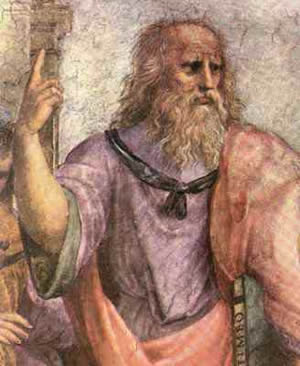
platoIt all started with Plato.  He postulated that there were two separate worlds:

  • The natural world that is visible and perceived through the senses
  • The spiritual world that is invisible and is the realm of thought and truth

The spiritual world was considered more real than the natural world.  The natural realm was  considered a lower realm or even insignificant.

The soul belonged to the spiritual world whereas the body belonged to the natural world.

Due to Hellenisation this Platonic divide (or dualism) was the foundation of Greek/Roman education and as Greek minded people embraced Christianity with this foundation they found it hard to understand concepts that were natural to those holding a Hebrew/Holistic view.

For example, how could a God who exists in the perfect world of thought and truth would become flesh and enter this corrupt world.  You can see John battling against this view:

“In the beginning was the Word, and the Word was with God, and the Word was God….The Word became flesh and made his dwelling among us.”  (Jn 1:1, 14).

And then in his letters he says:

“I say this because many deceivers, who do not acknowledge Jesus Christ as coming in the flesh, have gone out into the world. Any such person is the deceiver and the antichrist.” (2 Jn 1:7).

This is strong stuff – is it really that bad?  Well let’s see how this Greek/dualistic view worked out in the realm of thinking about sexuality and the body.

If the spirit or soul is important but not the body then you can end up with two extremes:

At one extreme there were some Gnostic cults who believed that they had already been perfected in the spiritual realm and so it did not matter what they did with their body.  The body is not important only the Spirit as they had transcended such moral laws.

This appears to be the error that the Corinthian church fell into when they were saying:  

“Everything is permissible for me…food for the stomach and the stomach for food”    (1 Cor 6:11)

Paul has to redirect them to the value of the body – Jesus has a bodily resurrection, their bodies are “members of Christ” and “temples of the Holy Spirit” and hence they should “honour God with [their] bodies”

At the other end of the extreme is the view that the body is a grave and the flesh a hindrance.  Hence all fleshy desires are sinful and should be suppressed.  Therefore one outcome is that “They forbid people to marry” (1 Tim 4:3) as it is stained by the uncleanness that comes from sexual relation.  Paul corrects this view with God created to be received with thanksgiving”.

So where did it go wrong?  

Well in the second century in fighting against the immorality of the former group Clement (who was trained in Athens in Greek thought and culture) started using the objective ethics of the stoics natural law (who were in the second camp).  The stoics didn’t want to give free reign to their passions but understood the importance of marriage for procreation, amongst other behaviours, as part of what they called the natural law of things.  This was also useful in fighting against the excesses of the second group who spurned the body and marriage.

However, this introduced a distrust of passion and removed the emphasis from marriage being a loving covenant.  It also reinforced the dualism of spiritual love and bodily/sexual love: spiritual love is good and bodily/sexual desire is evil.  Hence he declared:

“sexual intercourse must not take place heedlessly and for the sake of mere pleasure, but for the sake of begetting children”

This theme of desire and passion being sinful was developed in the third and fourth centuries by the early church fathers so that procreation soon became the only excuse for exercising sexuality:

“[Before the fall] Adam and Eve would have had intercourse for procreation, but without passion, that is, without the shame” Augustine

“For now (since the fall), although marriage is good, it includes something that makes even married people blush at themselves” Ambrose of Milan

“The activities of marriage itself, if they are not modest…so that the only intention is children, are filth and lust.” Jerome “For he who is intemperate* in marriage, what is he but the adulterer of his own wife” Augstine

Indeed, under Origen’s influence many theologians came to see marriage and sex as a consequence of original sin.  They believed that God designed man and woman to live as angels, in virginity and chastity.  Procreation was only from God’s foreknowing of the need to conserve the mortal beings after their sin and so the man and the woman are condemned to live out sexuality on the earth after Paradise was lost.

Marriage was seen at the very least as a turning of one’s eyes from God’s kingdom to “what is secular and mundane” (Ambrose) and should, according to Augustine only be undertaken for procreation and education of children and to avoid even worse sexual impurity.  Whereas virginity makes “mortals like unto angels” (John Chrysostom) and by the fifth century priests were forbidden to marry.

Augustine’s writings took great prominence up until the 12th century but their subtlety was lost and so all sex was seen carnal.  For example, Pope Gregory the Great said that

“conjugal union cannot take place without carnal pleasure, and such pleasure cannot under any circumstances be without blame”.

With the laity cut off from Scripture by a ruling celibate clerical class they fell prey to their doctrines.  Intercourse was banned on all Sundays and all the many feast days, as well as the 20 days before Christmas, the 40 days before Easter, and often the 20 days before Pentecost, as well as three or more days before receiving Communion (which at that time was offered only a few times a year). These forbidden days altogether totalled about 40% of each year.  Clergy routinely warned believers that children conceived on holy days would be born leprous, epileptic, diabolically possessed, blind, or crippled. By the eighth century an enormously strict system of sexual rules and penalties was firmly in place, covering every imaginable thought and action related to sex for confessions (for example 20 to 40 days of strict fasting on bread and water were imposed on those who had intercourse on the banned days).

In addition, since Eve was seen as the tempting seductress by whom Adam lost his liberty, authority and reason – women were treated with disdain except for those who were virgins and thus denied their very womanhood.

So was John right about this view being of the antichrist?  Absolutely.  Something so small has ended up with an evil system of religion.  A far cry from the Hebrew/holistic view of celebrating this good and beautiful gift.

Reformation

The reformation in the 16th Century saw strides in the right direction with Luther fighting against the obligatory vows of celibacy and this wrong view of sexuality:

“man and woman are a work of God…do not criticise His work, or call that evil which he himself has called good” Martin Luther

Although the reformers attitude on sexuality is prudent and discrete it is very different:

“but that God should permit a bride to enjoy herself with her husband, affords no trifling proof of His indulgence” John Calvin

Marriage is seen as the order willed by God and celibacy is seen as the exception:

“If anyone imagines that it is to his advantage to be without a wife and so without further consideration decides to be celibate, he is very much in error.”  John Calvin

The Puritans, despite taking a dim view of celebrations such as Christmas, took the matrimonial duty of sex so seriously that failure to extend “due benevolence” by either partner could be grounds for church discipline.

However, society as a whole seemed to have trouble throwing off the Greek dualism and flips between repression and then a reaction of loose living and debauchery.  The latest being the Victorian era whose strict moral standards prevented even certain body parts being mentioned in public.  It is no surprise that the “sexual revolution” of the 60’s was simply an explosion against the ongoing repression and the hypocrisy of those who preached it.  As Christopher West puts it so eloquently:

“A person can starve himself for only so long before the choice becomes clear: either I find something to eat, or I’m going to die…That’s why the culture’s “fast-food gospel” – the promise of immediate gratification through indulgence of desire – inevitably wins large numbers of converts from the “starvation diet gospel”.  I don’t know about you, but if the only two choices are starvation or greasy chicken nuggets, I’m going for the nuggets”

So where are we now? 

Well the Church typically takes one of three positions:

At one extreme we have the “free grace” movement who believe that Christ has forgiven us so we can do what we want.  This is the modern equivalent of the Corinthian view.  This “cheap grace” means that they are no different from the world and devalue the gift.

At the other end we still have those churches who see the immorality in the world and preach a “gospel” (though it is not good news at all) of sex is bad, sex is dirty, save it for the one you love.  This is the modern equivalent of the ascetic/stoic view and leads to Christians feeling condemned, guilty and marriages in trouble.

And then in between there are those churches who sit uncomfortably in the middle and say nothing.  They simply bury their heads in the sand and hope it goes away.  But it doesn’t and then we, and our children, are vulnerable to a world that isn’t shy about presenting its opinion forcefully and seductively.  In the end, the church just ends up conforming to the world but keeping it out of conversation of the church family.

The voice of one crying in the desert

However, all is not lost!  The Spirit has been speaking to us and many others worldwide about restoring what has been lost: to no longer react against immorality or absorb it but to instead receive the gift of sexuality and show how it points to something far more glorious.  We are privileged to be part of those helping the Bride make herself ready for Christ’s return.

It is our prayer that this blog, our YouTube videos, godly sexuality workshops and social media groups will help restore what has been distorted by the world and religion, bring sexual wholeness and enable you to pass that onto your children.

We look forward to having you journey with us.

www.godlysexuality.com

* intemperate = immoderate in indulgence of appetite or passion.

Some references:

“Sexual Desire & Love: Origins and History of the Christian Ethic of Sexuality and Marriage” 
Eric Fuchs
An in depth thesis on this issue – comprehensive up to the reformation but heavy going!

“Christianity Unshackled” 
Harold R. Eberle
Easy to read guide to how dualism, Augustine and rationalism has affected Christianity.

“The hall of Church History”
Website with all the writings of the church fathers in one place.

“The Puritan’s view of Sex”
Brief blog entry on R C Sproul’s website.

And of course Wikipedia.

Welcome

Welcome!

Welcome to the official wordpress blog for godlysexuality.org.

Thank you so much for your patience during my wife’s illness – with Jennie now nearly fully recovered I can focus on making this a reality.

The aim of this blog is to help you gain a greater revelation of how our sexuality is ultimately a shadow of the heavenly reality of the Trinity and a foretaste of our ultimate union with Christ, ie our sexuality is theographic.

It is my hope that this will lead to greater sexual wholeness amongst Christians and in particular help parents impart a view of sexuality that is far superior to anything the world can offer.

The content of this blog will start with the face-to-face “teach your children godly sexuality” workshop that I run with both video and transcript.  e-workbooks will also be available for subscribers.

In addition the blog will allow me to go a little deeper on some of the theological issues that are introduced in the course.  This will allow us to wrestle together with becoming more godly and also with training our children.

Finally I’ll be reviewing some of the many books and videos out there on this subject and be sharing any resources I have created to help me or my children on our journey.

This blog is not going to be the definitive answer – I’ve not finished my journey yet!  But I hope that my honesty in sharing what I have received over the course of my Christian life will bless you.  I’m hoping that you will also share what has been revealed to you so we can all benefit and encourage each other onwards.

When responding to any comments that I or others make, please remember we are all children of the same heavenly father and are only saved by grace.

Much love in Jesus

John