What is the churches current position on sexuality and how did it end up there?
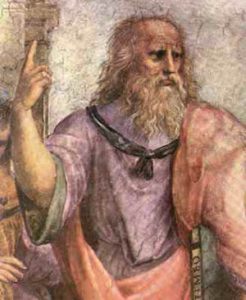 It all started with Plato. He postulated that there were two separate worlds:
- The natural world that is visible and perceived through the senses
- The spiritual world that is invisible and is the realm of thought and truth
The spiritual world was considered more real than the natural world. The natural realm was considered a lower realm or even insignificant.
The soul belonged to the spiritual world whereas the body belonged to the natural world.
Due to Hellenisation this Platonic divide (or dualism) was the foundation of Greek/Roman education and as Greek minded people embraced Christianity with this foundation they found it hard to understand concepts that were natural to those holding a Hebrew/Holistic view.
For example, how could a God who exists in the perfect world of thought and truth would become flesh and enter this corrupt world. You can see John battling against this view:
“In the beginning was the Word, and the Word was with God, and the Word was God….The Word became flesh and made his dwelling among us.” (Jn 1:1, 14).
And then in his letters he says:
“I say this because many deceivers, who do not acknowledge Jesus Christ as coming in the flesh, have gone out into the world. Any such person is the deceiver and the antichrist.” (2 Jn 1:7).
This is strong stuff – is it really that bad? Well let’s see how this Greek/dualistic view worked out in the realm of thinking about sexuality and the body.
If the spirit or soul is important but not the body then you can end up with two extremes:
At one extreme there were some Gnostic cults who believed that they had already been perfected in the spiritual realm and so it did not matter what they did with their body. The body is not important only the Spirit as they had transcended such moral laws.
This appears to be the error that the Corinthian church fell into when they were saying:
“Everything is permissible for me…food for the stomach and the stomach for food” (1 Cor 6:11)
Paul has to redirect them to the value of the body – Jesus has a bodily resurrection, their bodies are “members of Christ” and “temples of the Holy Spirit” and hence they should “honour God with [their] bodies”
At the other end of the extreme is the view that the body is a grave and the flesh a hindrance. Hence all fleshy desires are sinful and should be suppressed. Therefore one outcome is that “They forbid people to marry” (1 Tim 4:3) as it is stained by the uncleanness that comes from sexual relation. Paul corrects this view with “God created to be received with thanksgiving”.
So where did it go wrong?
Well in the second century in fighting against the immorality of the former group Clement (who was trained in Athens in Greek thought and culture) started using the objective ethics of the stoics natural law (who were in the second camp). The stoics didn’t want to give free reign to their passions but understood the importance of marriage for procreation, amongst other behaviours, as part of what they called the natural law of things. This was also useful in fighting against the excesses of the second group who spurned the body and marriage.
However, this introduced a distrust of passion and removed the emphasis from marriage being a loving covenant. It also reinforced the dualism of spiritual love and bodily/sexual love: spiritual love is good and bodily/sexual desire is evil. Hence he declared:
“sexual intercourse must not take place heedlessly and for the sake of mere pleasure, but for the sake of begetting children”
This theme of desire and passion being sinful was developed in the third and fourth centuries by the early church fathers so that procreation soon became the only excuse for exercising sexuality:
“[Before the fall] Adam and Eve would have had intercourse for procreation, but without passion, that is, without the shame” Augustine
“For now (since the fall), although marriage is good, it includes something that makes even married people blush at themselves” Ambrose of Milan
“The activities of marriage itself, if they are not modest…so that the only intention is children, are filth and lust.” Jerome “For he who is intemperate* in marriage, what is he but the adulterer of his own wife” Augstine
Indeed, under Origen’s influence many theologians came to see marriage and sex as a consequence of original sin. They believed that God designed man and woman to live as angels, in virginity and chastity. Procreation was only from God’s foreknowing of the need to conserve the mortal beings after their sin and so the man and the woman are condemned to live out sexuality on the earth after Paradise was lost.
Marriage was seen at the very least as a turning of one’s eyes from God’s kingdom to “what is secular and mundane” (Ambrose) and should, according to Augustine only be undertaken for procreation and education of children and to avoid even worse sexual impurity. Whereas virginity makes “mortals like unto angels” (John Chrysostom) and by the fifth century priests were forbidden to marry.
Augustine’s writings took great prominence up until the 12th century but their subtlety was lost and so all sex was seen carnal. For example, Pope Gregory the Great said that
“conjugal union cannot take place without carnal pleasure, and such pleasure cannot under any circumstances be without blame”.
With the laity cut off from Scripture by a ruling celibate clerical class they fell prey to their doctrines. Intercourse was banned on all Sundays and all the many feast days, as well as the 20 days before Christmas, the 40 days before Easter, and often the 20 days before Pentecost, as well as three or more days before receiving Communion (which at that time was offered only a few times a year). These forbidden days altogether totalled about 40% of each year. Clergy routinely warned believers that children conceived on holy days would be born leprous, epileptic, diabolically possessed, blind, or crippled. By the eighth century an enormously strict system of sexual rules and penalties was firmly in place, covering every imaginable thought and action related to sex for confessions (for example 20 to 40 days of strict fasting on bread and water were imposed on those who had intercourse on the banned days).
In addition, since Eve was seen as the tempting seductress by whom Adam lost his liberty, authority and reason – women were treated with disdain except for those who were virgins and thus denied their very womanhood.
So was John right about this view being of the antichrist? Absolutely. Something so small has ended up with an evil system of religion. A far cry from the Hebrew/holistic view of celebrating this good and beautiful gift.
Reformation
The reformation in the 16th Century saw strides in the right direction with Luther fighting against the obligatory vows of celibacy and this wrong view of sexuality:
“man and woman are a work of God…do not criticise His work, or call that evil which he himself has called good” Martin Luther
Although the reformers attitude on sexuality is prudent and discrete it is very different:
“but that God should permit a bride to enjoy herself with her husband, affords no trifling proof of His indulgence” John Calvin
Marriage is seen as the order willed by God and celibacy is seen as the exception:
“If anyone imagines that it is to his advantage to be without a wife and so without further consideration decides to be celibate, he is very much in error.” John Calvin
The Puritans, despite taking a dim view of celebrations such as Christmas, took the matrimonial duty of sex so seriously that failure to extend “due benevolence” by either partner could be grounds for church discipline.
However, society as a whole seemed to have trouble throwing off the Greek dualism and flips between repression and then a reaction of loose living and debauchery. The latest being the Victorian era whose strict moral standards prevented even certain body parts being mentioned in public. It is no surprise that the “sexual revolution” of the 60’s was simply an explosion against the ongoing repression and the hypocrisy of those who preached it. As Christopher West puts it so eloquently:
“A person can starve himself for only so long before the choice becomes clear: either I find something to eat, or I’m going to die…That’s why the culture’s “fast-food gospel” – the promise of immediate gratification through indulgence of desire – inevitably wins large numbers of converts from the “starvation diet gospel”. I don’t know about you, but if the only two choices are starvation or greasy chicken nuggets, I’m going for the nuggets”
So where are we now?
Well the Church typically takes one of three positions:
At one extreme we have the “free grace” movement who believe that Christ has forgiven us so we can do what we want. This is the modern equivalent of the Corinthian view. This “cheap grace” means that they are no different from the world and devalue the gift.
At the other end we still have those churches who see the immorality in the world and preach a “gospel” (though it is not good news at all) of sex is bad, sex is dirty, save it for the one you love. This is the modern equivalent of the ascetic/stoic view and leads to Christians feeling condemned, guilty and marriages in trouble.
And then in between there are those churches who sit uncomfortably in the middle and say nothing. They simply bury their heads in the sand and hope it goes away. But it doesn’t and then we, and our children, are vulnerable to a world that isn’t shy about presenting its opinion forcefully and seductively. In the end, the church just ends up conforming to the world but keeping it out of conversation of the church family.
The voice of one crying in the desert
However, all is not lost! The Spirit has been speaking to us and many others worldwide about restoring what has been lost: to no longer react against immorality or absorb it but to instead receive the gift of sexuality and show how it points to something far more glorious. We are privileged to be part of those helping the Bride make herself ready for Christ’s return.
It is our prayer that this blog, our YouTube videos, godly sexuality workshops and social media groups will help restore what has been distorted by the world and religion, bring sexual wholeness and enable you to pass that onto your children.
We look forward to having you journey with us.
www.godlysexuality.com
* intemperate = immoderate in indulgence of appetite or passion.
Some references:
“Sexual Desire & Love: Origins and History of the Christian Ethic of Sexuality and Marriage”
Eric Fuchs
An in depth thesis on this issue – comprehensive up to the reformation but heavy going!
“Christianity Unshackled”
Harold R. Eberle
Easy to read guide to how dualism, Augustine and rationalism has affected Christianity.
“The hall of Church History”
Website with all the writings of the church fathers in one place.
“The Puritan’s view of Sex”
Brief blog entry on R C Sproul’s website.
And of course Wikipedia.

 The official blog of godlysexuality.com